Easter morning sounds lovely in theory. In practice, you’re fielding questions about egg dye while something’s burning on the stove, your oven is already committed to the ham, and somehow it’s 9:47am and no one has eaten yet.
The fix is simple: make brunch the night before.
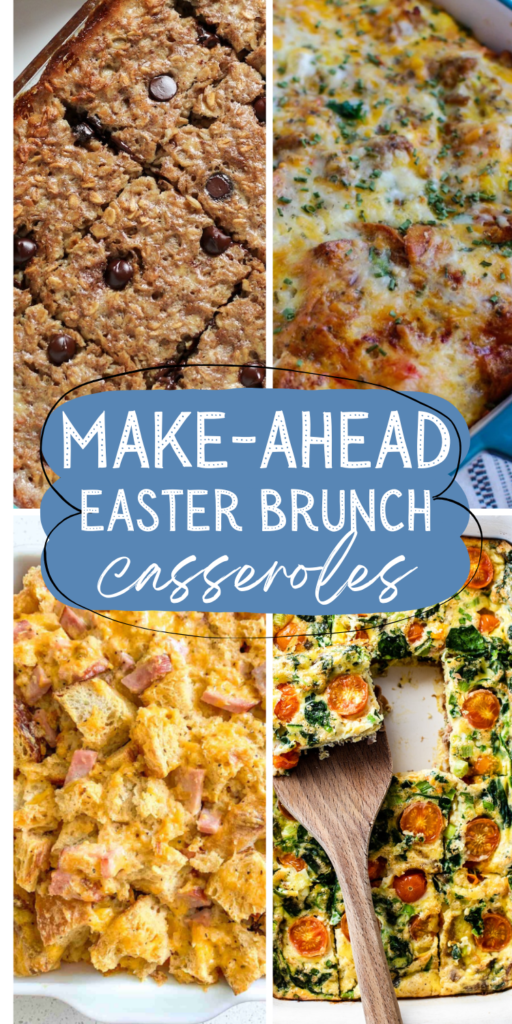
These 18 make-ahead Easter brunch casseroles are designed for the home cook who wants a table full of impressive food without a morning full of chaos. Every recipe can be fully or mostly assembled ahead of time — some just need a night in the fridge, some can be prepped three days out, and several go straight from the freezer to the oven whenever you’re ready. You choose the prep path that fits your week.
There’s a mix of sweet and savory here, options that are naturally gluten-free, and several that work just as well for a crowd of six as they do for twenty.
And because feeding a family shouldn’t require a second mortgage, I’ve included cost-per-serving estimates on every recipe. Most land between $1 and $2 a plate — and every one of them looks like you put in far more effort than you actually did.
Pick your recipe. Do the work tonight. Wake up to a finished Easter brunch.
Read my full disclosure here if you’d like the details.
Why Make-Ahead Easter Brunch Casseroles are a Host’s Best Friend
A make-ahead Easter brunch casserole is the rare dish that actually gets better when you make it ahead. The flavors meld overnight, the bread or potato base absorbs the custard fully, and by the time your guests arrive you’re not standing over a skillet — you’re at the table. That shift from cook to host is the whole point. Easter morning is short. Spending it in the kitchen instead of with the people you made it for is a bad trade.
The other reason casseroles make sense for Easter specifically is cost. A single 9×13 breakfast casserole feeds eight to twelve people for what most families would spend on four individual breakfast plates — most of the recipes in this roundup come in at $1 to $2 per serving. Scale it up, add a second dish from this list, and you’ve fed a crowd of twenty for less than the cost of taking six people out to brunch.
Once you know why casseroles work, the next question is which one is right for your table — and that depends on a few things worth thinking through before you start shopping.
How to Pick the Right Casserole for Your Crowd
The right make-ahead casserole depends on who’s coming and what you’re working with.
- Feeding 6–8: Almost any single recipe here works as a standalone dish — pick whatever sounds best to you.
- Feeding 12+: Choose two complementary casseroles, one sweet and one savory, and let people fill their own plates.
- Feeding 20+: Look for recipes that explicitly scale into two pans, or make a double batch of your favorite.
- Budget under $10: The baked oatmeal, sourdough French toast bake, and cinnamon bun bread pudding are your best bets — pantry staples, no specialty ingredients.
- Budget under $15: The raspberry brioche French toast casserole and smoked salmon casserole both look far more expensive than they are.
- Minimal stovetop skill: Stick to recipes that don’t require browning meat — the baked oatmeal, quiche, and French toast casseroles are all one-bowl assembly.
- Feeding a mixed dietary crowd: Every recipe in this roundup includes gluten-free, dairy-free, or vegetarian swap notes — no one gets left out.
None of these recipes require culinary experience. If you can whisk eggs and operate an oven, you can make anything on this list.
PIN IT FOR LATER TO YOUR FAVORITE PINTEREST BOARD
Savory Brunch Casseroles
Why It’s Worth Making
- This is the true overnight option — the one where 100% of the work happens the night before and Easter morning is just preheat, bake, and pour the coffee.
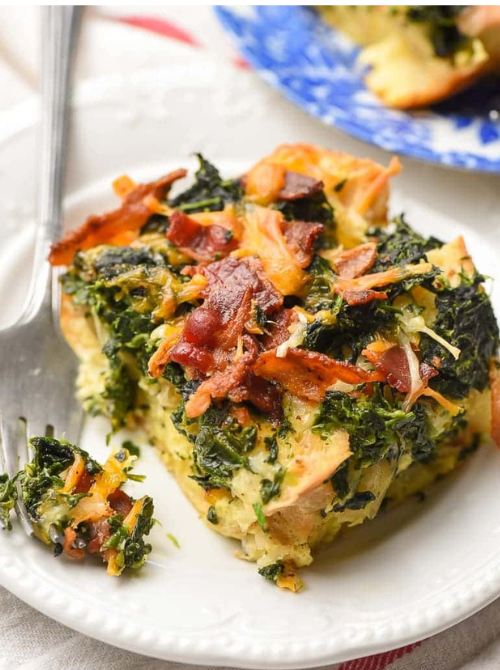
- What makes this casserole different from every other Easter brunch recipe I’ve seen? The onions are sautéed in bacon grease and the spinach is wilted right in the same pan, creating a depth of flavor you simply can’t get from dumping ingredients into a dish raw.
- How much will this actually cost me to make? Roughly $14–16 for a 9×13 pan serving 8 — use day-old sourdough (structurally better here anyway) and store-brand bacon to bring it closer to $12.
- How far ahead can I make this — and what’s my best prep path? You must refrigerate this at least 6 hours before baking; overnight is ideal — or freeze unbaked for up to 3 months, then thaw overnight and bake as normal.
- How long does it take, and how hard is it really? 25 minutes of active prep the night before (bacon, onions, assembly), then 35–40 minutes of completely hands-off baking Easter morning.
- Can I make this work for everyone at my table? Swap the bacon for diced ham to simplify; omit it entirely and double the spinach for a vegetarian version — the caramelized onions provide enough savory depth to hold the dish together.
- Will this look impressive enough to set on an Easter brunch table? The layered cross-section of bread, greens, and bacon visible when sliced gives it a rustic, stacked look.
- What do I do with leftovers? Refrigerate up to 4 days; individual squares reheat beautifully in 60–90 seconds and are just as satisfying on Tuesday morning as they were on Easter.
- What’s the one thing I need to know to make sure this turns out perfectly? Use day-old or intentionally dried-out bread — fresh soft bread turns to mush overnight, while slightly stale bread absorbs the custard and holds its structure through baking.
Why It’s Worth Making
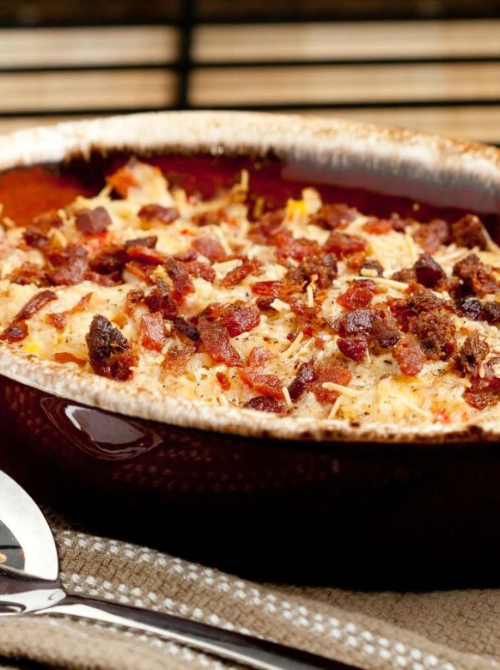
- This is the centerpiece pick — the one that looks like you spent the morning in the kitchen when you actually just mixed a bowl the night before.
- What makes this casserole different from every other Easter brunch recipe I’ve seen? Cream of potato soup replaces a made-from-scratch sauce, and a double layer of Parmesan and crumbled bacon on top creates a golden, savory crust no basic egg bake can match.
- How much will this actually cost me to make? Roughly $1.75–$2 per serving — and if you’re using leftover ham, the whole dish comes in under $12.
- How far ahead can I make this — and what’s my best prep path? Assemble the night before, refrigerate unbaked, and pull it straight into a 375°F oven in the morning.
- How long does it take, and how hard is it really? 5 minutes of mixing, 45–60 minutes of hands-off baking — no stovetop, no layering, just one bowl.
- Can I make this work for everyone at my table? It’s naturally gluten-free; swap sour cream for a plant-based version and use dairy-free cheese to make it fully DF.
- Will this look impressive enough to set on an Easter brunch table? The golden Parmesan-bacon crust does the visual work — finish with a scatter of fresh parsley and it looks far more effort than it was.
- What do I do with leftovers? Refrigerate up to 4 days; slices reheat in 90 seconds and work equally well tucked into a wrap for lunch.
- What’s the one thing I need to know to make sure this turns out perfectly? Use thawed shredded hash browns — not diced — for the perfect outcome.
Why It’s Worth Making
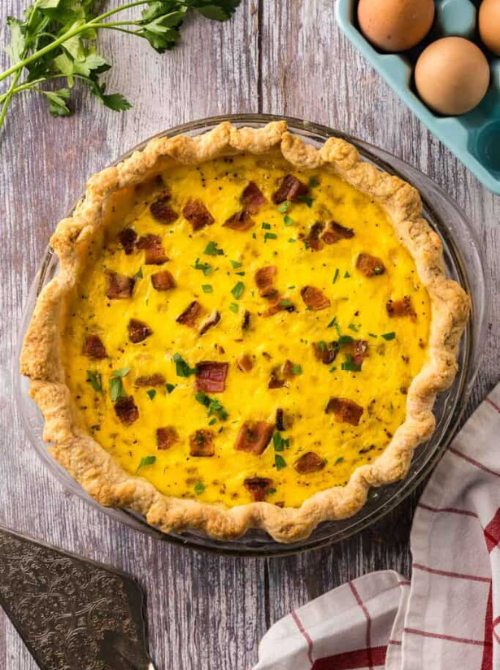
- This is the elegant pick — the one that signals “someone here actually cooks” and looks restaurant-quality without requiring any special skill.
- What makes this casserole different from every other Easter brunch recipe I’ve seen? A single base recipe — 4 eggs, 1 cup half-and-half, 1 cup cheese — unlocks four distinct quiche variations (Lorraine, ham and Swiss, smoked salmon, spinach feta), making it the most adaptable recipe in this roundup.
- How much will this actually cost me to make? Expect $10–14 total, or roughly $1.50–$2 per serving depending on your filling.
- How far ahead can I make this — and what’s my best prep path? Bake 1–2 days ahead, refrigerate, and reheat at 325°F for 15 minutes — or blind-bake the crust up to 2 days ahead and assemble the morning of for a fresher bake.
- How long does it take, and how hard is it really? 15 minutes active prep with a store-bought crust, 10 minutes to blind-bake, then 45–50 minutes baking — the only technique to learn is blind baking, which is just parchment and beans for 10 minutes.
- Can I make this work for everyone at my table? Skip the crust entirely for a gluten-free crustless version; swap dairy for oat milk and dairy-free cheese for a DF option; the spinach-feta variation is naturally vegetarian.
- Will this look impressive enough to set on an Easter brunch table? Quiche has instant visual credibility — a golden puffed top with visible fillings and a flaky crust that slices into clean wedges with zero extra styling effort.
- What do I do with leftovers? Refrigerate up to 3 days; reheat slices in a 300°F oven to keep the crust crisp, or freeze individual wedges for grab-and-go breakfasts throughout the week.
- What’s the one thing I need to know to make sure this turns out perfectly? Don’t skip blind-baking the crust — adding wet egg filling to a raw shell guarantees a soggy bottom no amount of extra bake time will fix.
Why It’s Worth Making
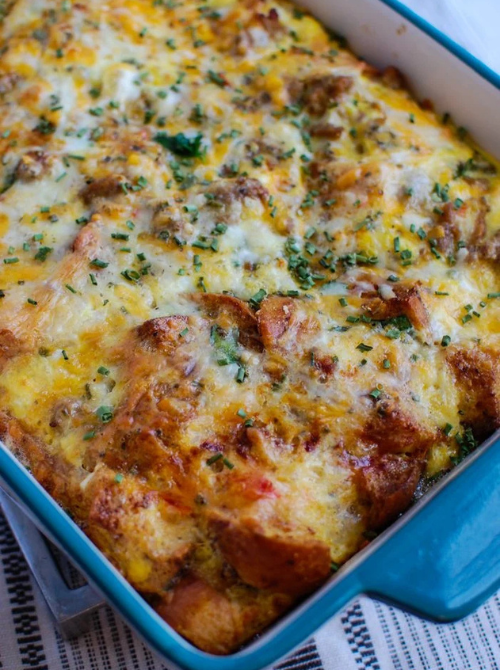
- This is the budget pick — one of the lowest cost-per-serving in the roundup and the longest fridge life, which means it’s still working for you on Wednesday morning.
- What makes this casserole different from every other Easter brunch recipe I’ve seen? Store-bought croutons replace bread or potatoes as the base — no cubing, no drying out, no prep — and they create a sturdier texture that holds up better over multiple days than any other base in this roundup.
- How much will this actually cost me to make? Estimated $10–13, with a cost per serving around $1.25–$1.65 — one of the most budget-friendly recipe in this lineup.
- How far ahead can I make this — and what’s my best prep path? Assemble completely, cover, and refrigerate for 2 hours or up to overnight — then sprinkle on the remaining cheese right before baking.
- How long does it take, and how hard is it really? About 20 minutes of active prep (browning sausage, sautéing onion and pepper), then 40–45 minutes of baking — straightforward with two cooking steps before the dish goes in the fridge.
- Can I make this work for everyone at my table? Swap turkey sausage for pork for richer flavor, or omit entirely and add mushrooms and roasted tomatoes for a vegetarian version; use gluten-free croutons to accommodate GF guests.
- Will this look impressive enough to set on an Easter brunch table? Colorful bell pepper and fresh herbs visible through the set egg give this a vibrant, fresh look — finish with sliced green onions and a dish of sour cream on the side.
- What do I do with leftovers? Refrigerate up to 5 days — the longest window in this roundup — and the crouton base holds its structure better on day four than any bread-based casserole will.
- What’s the one thing I need to know to make sure this turns out perfectly? Insert a knife in the center before pulling it — it should come out clean, because the crouton base absorbs extra moisture and an underbaked center won’t firm up once it hits the plate.
Why It’s Worth Making
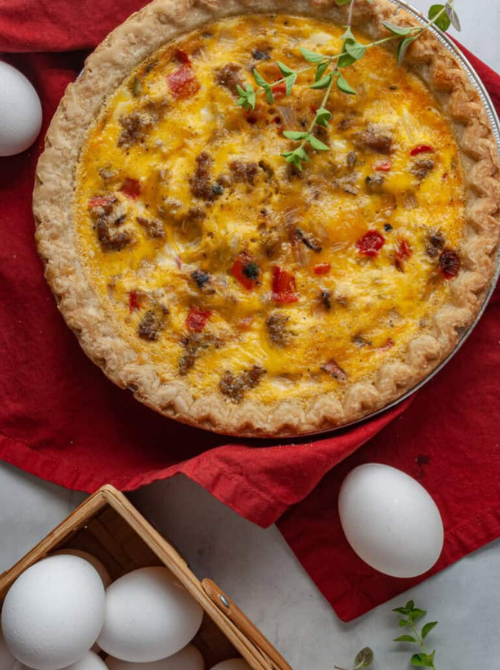
- This is the two-for-one pick — the only recipe in this roundup that gives you a complete second meal for the freezer before Easter morning is even over.
- What makes this casserole different from every other Easter brunch recipe I’ve seen? The recipe makes two quiches at once — serve one at Easter brunch and freeze the second unbaked, ready to bake from frozen at 350°F for 25 minutes with no thawing required.
- How much will this actually cost me to make? About $12–15 total for both quiches combined — roughly $0.75–$0.95 per serving, making this the best cost-per-serving value in the entire roundup.
- How far ahead can I make this — and what’s my best prep path? Bake both, serve one, and freeze the second covered in foil — bake straight from frozen at 350°F for 25 minutes whenever you need it, no thawing needed.
- How long does it take, and how hard is it really? About 20 minutes of active prep (blind-baking the crusts, cooking sausage and vegetables, whisking the filling), then 40–45 minutes baking — making two at once adds barely 5 extra minutes.
- Can I make this work for everyone at my table? Swap spicy sausage for mild or chicken sausage for a heat-sensitive crowd; use a gluten-free pie crust or bake the filling crustless in a greased dish for GF guests.
- Will this look impressive enough to set on an Easter brunch table? A properly baked quiche with a flaky crust, golden top, and colorful pepper-and-sausage filling visible through the custard looks bakery-worthy with zero extra styling.
- What do I do with leftovers? Refrigerate up to 4 days, or keep the second quiche frozen and bake it straight from the freezer any morning you need a quick, impressive breakfast.
- What’s the one thing I need to know to make sure this turns out perfectly? Let the cooked sausage and vegetable filling cool to room temperature before adding it to the egg mixture — hot filling poured into cold eggs creates uneven cooking and a rubbery texture.
Why It’s Worth Making
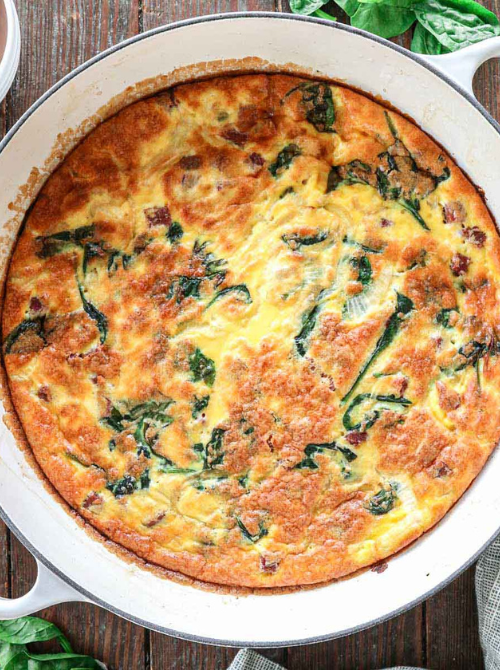
- This is the health-conscious pick — the one your guests will ask about when they find out a single square delivers 20 grams of protein and tastes nothing like healthy food.
- What makes this casserole different from every other Easter brunch recipe I’ve seen? Cottage cheese is blended directly into the egg base, creating an unusually creamy, custard-like texture and delivering approximately 20 grams of protein per serving — with zero protein powder or specialty ingredients.
- How much will this actually cost me to make? Estimated $10–14 for the full dish.
- How far ahead can I make this — and what’s my best prep path? Bake the night before, cool completely, slice into portions, and refrigerate — it reheats in individual squares with no quality loss, making it ideal for both Easter brunch and weekday mornings after.
- How long does it take, and how hard is it really? 10–15 minutes active prep (caramelizing onions, blending the egg base), then 80 minutes of hands-off baking at a low 320°F — the blender does the heavy lifting.
- Can I make this work for everyone at my table? It’s naturally gluten-free and low-carb; swap ham for diced mushrooms and roasted red peppers for a vegetarian version, and use dairy-free cheese for a DF adaptation.
- Will this look impressive enough to set on an Easter brunch table? It bakes to a clean, even golden top that slices into perfect squares — garnish with fresh chives or a sprinkle of smoked paprika for a polished, intentional look.
- What do I do with leftovers? Refrigerate individual portions up to 4 days — this is the one casserole in the roundup that works equally well reheated as a post-Easter weekday breakfast as it does straight from the oven on Sunday.
- What’s the one thing I need to know to make sure this turns out perfectly? Add a tablespoon of potato starch (or gluten-free flour) to the blended egg mixture — it binds excess moisture from the cottage cheese and prevents the soggy center that sinks most egg bakes.
Why It’s Worth Making
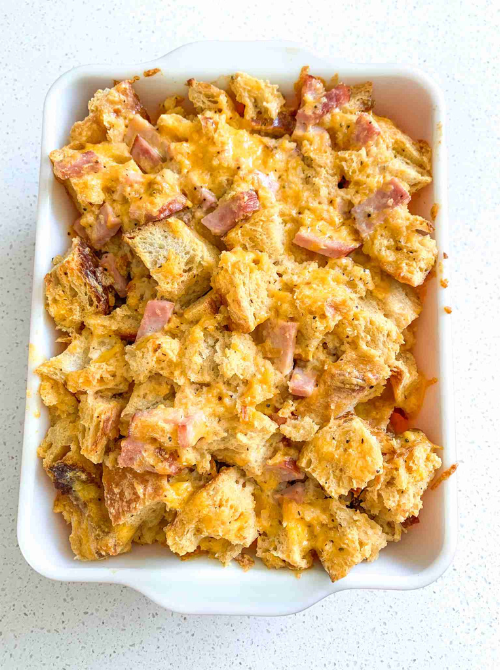
- This is the pick for the guest who always skips breakfast casserole who will actually eat this one, because it tastes like cheesy sourdough toast, not a baked egg dish.
- What makes this casserole different from every other Easter brunch recipe I’ve seen? It’s specifically designed for people who don’t love egg-heavy casseroles — the sourdough bread base absorbs the custard and takes center stage, so the flavor reads as cheesy ham-and-bread rather than baked eggs.
- How much will this actually cost me to make? One of the leanest ingredient lists in this roundup — estimate $8–11, and even less if you’re using leftover ham.
- How far ahead can I make this — and what’s my best prep path? Two options: refrigerate 20 minutes before baking for a slightly firmer texture, or assemble and refrigerate overnight for a softer, more bread-pudding-like result — both are delicious, just different.
- How long does it take, and how hard is it really? One bowl, no stovetop cooking — just whisk, toss, refrigerate, and bake for 20–25 minutes; it’s the fastest active prep time in this entire roundup.
- Can I make this work for everyone at my table? Use an egg replacement product for an egg-free version; swap regular milk for oat or almond milk for dairy-free; the Dijon mustard and smoked paprika in the custard are the flavor backbone, so don’t skip them.
- Will this look impressive enough to set on an Easter brunch table? The golden, crisped sourdough chunks peeking through melted cheese on top give it a rustic artisan bakery aesthetic — it photographs beautifully and looks distinctly different from every other casserole on the table.
- What do I do with leftovers? Store in an airtight container up to 3 days, or freeze for up to 3 months; reheat in a 350°F oven for 10–12 minutes to revive the crust texture that a microwave would flatten.
- What’s the one thing I need to know to make sure this turns out perfectly? Make sure your oven is fully preheated before the casserole goes in — an under-temperature oven is the primary cause of a soggy result in this recipe, and 375°F needs to be reached before the dish enters.
Sweet Brunch Treats
Why It’s Worth Making
- This is the wow-factor pick — the one that makes guests ask “how did you make this?”
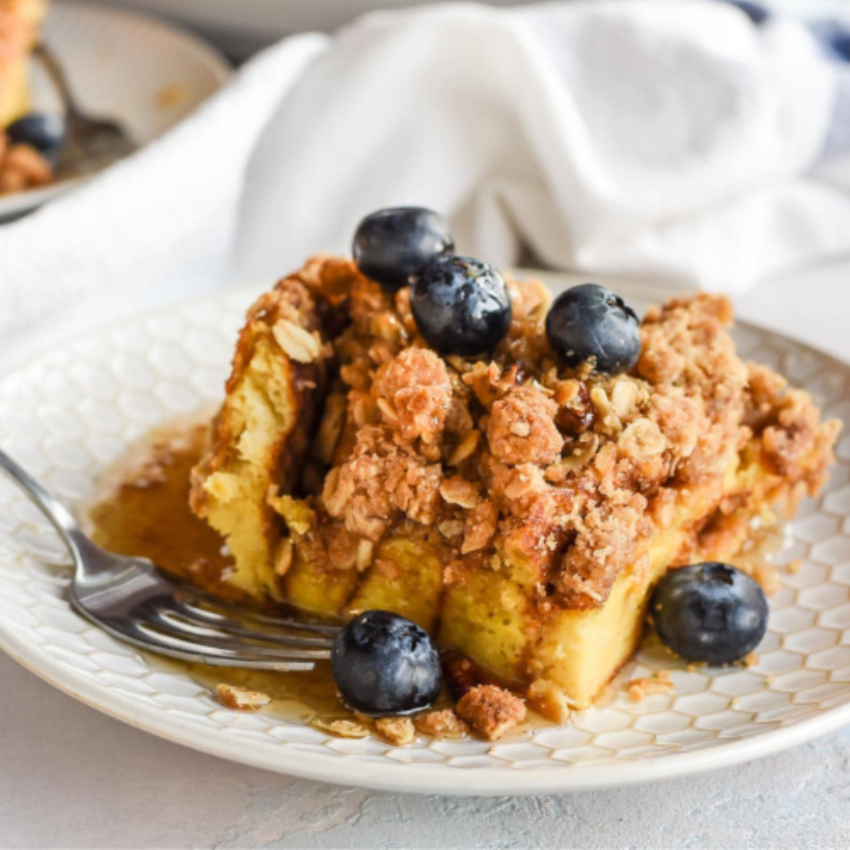
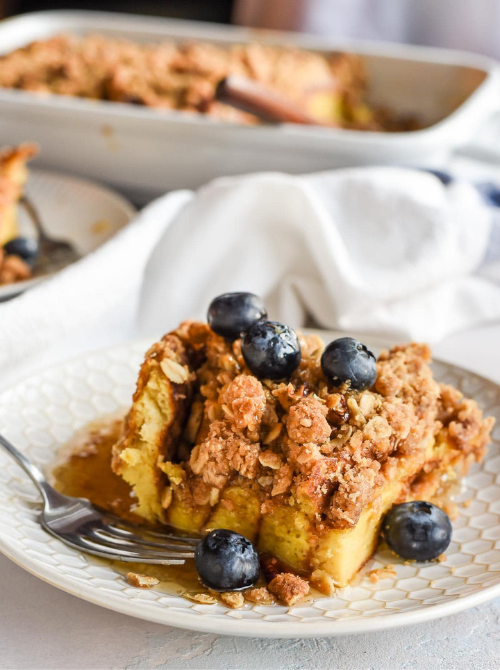
- What makes this casserole different from every other Easter brunch recipe I’ve seen? It starts with scratch-made buttermilk pancakes (not batter poured into a dish), then soaks them overnight in a custard that transforms them into a rich, bread pudding–style bake topped with a buttery cinnamon oat streusel.
- How much will this actually cost me to make? Estimated $10–14 for a 9×13 dish.
- How far ahead can I make this — and what’s my best prep path? Make the pancakes the day before, assemble with custard, refrigerate overnight, and prep the streusel at the same time to store separately — morning effort is just sprinkling the topping and sliding it in the oven.
- How long does it take, and how hard is it really? About 45 minutes active the night before (making the pancakes is the longest step), then 45 minutes of hands-off baking in the morning — the electric skillet shortcut makes the pancake batch go significantly faster.
- Can I make this work for everyone at my table? Use a gluten-free pancake mix for GF guests; substitute dairy-free milk and butter throughout for a DF version; the custard ratio (eggs to liquid) stays the same regardless of the milk type used.
- Will this look impressive enough to set on an Easter brunch table? The thick, golden streusel crust on top is the visual showstopper — it looks far more elaborate than it is, and the steam rising when you cut into it at the table is a guaranteed crowd moment.
- What do I do with leftovers? Store covered up to 2–3 days in the fridge; reheat individual squares in the microwave, though the streusel softens — a quick 5-minute reheat in a dry skillet revives the crunch.
- What’s the one thing I need to know to make sure this turns out perfectly? Don’t skip letting the custard soak overnight — the pancakes need the full rest to fully absorb the egg mixture and achieve that soft, custardy interior rather than just wet pancakes.
Why It’s Worth Making
- This is the wholesome pick — the one parents will actually feel good serving to kids at the Easter table.”
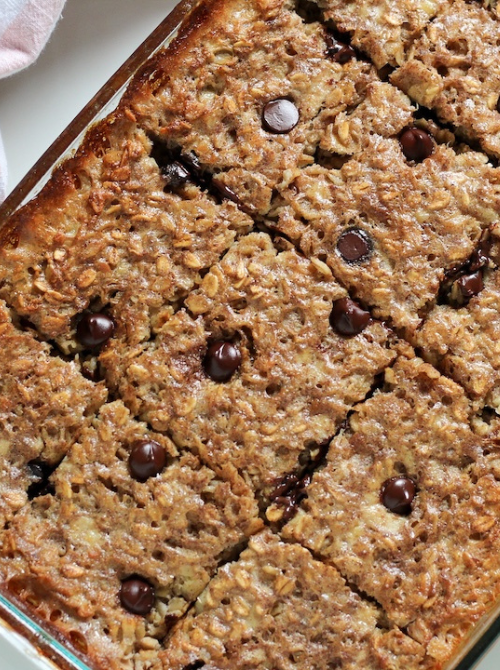
- What makes this casserole different from every other Easter brunch recipe I’ve seen? It’s developed by registered dietitian chefs, which means the banana-to-oat ratio, sweetener level, and milk type have all been tested for both nutrition and flavor — not just thrown together.
- How much will this actually cost me to make? One of the lowest-cost sweets in this roundup — under $8 for 12 generous servings, roughly $0.65 per serving.
- How far ahead can I make this — and what’s my best prep path? Bake the night before, cool completely, cut into bars, wrap individually, and refrigerate for up to a week — or freeze individual portions for up to 3 months and microwave from frozen in the morning.
- How long does it take, and how hard is it really? 10 minutes of mixing in two bowls, 35–40 minutes of baking — no stovetop, no special technique, just whisk, combine, and bake.
- Can I make this work for everyone at my table? Naturally gluten-free and nut-free; swap eggs for 2 flax eggs for a fully plant-based version, and any dairy or non-dairy milk works (though the original recipe notes almond milk didn’t produce ideal results — oat milk is a better DF swap).
- Will this look impressive enough to set on an Easter brunch table? Scatter a few extra chocolate chips on top before baking for a bakery-style finish — it cuts into neat golden squares that look polished on any serving board.
- What do I do with leftovers? Store up to 1 week refrigerated or 3 months frozen; individual wrapped bars are the best grab-and-go breakfast in the entire roundup — pop one in the microwave for 45 seconds and breakfast is done.
- What’s the one thing I need to know to make sure this turns out perfectly? Use very ripe, spot-covered bananas — they provide the natural sweetness that makes this recipe work without loading it with extra sugar, and under-ripe bananas will leave the bake flat and bland.
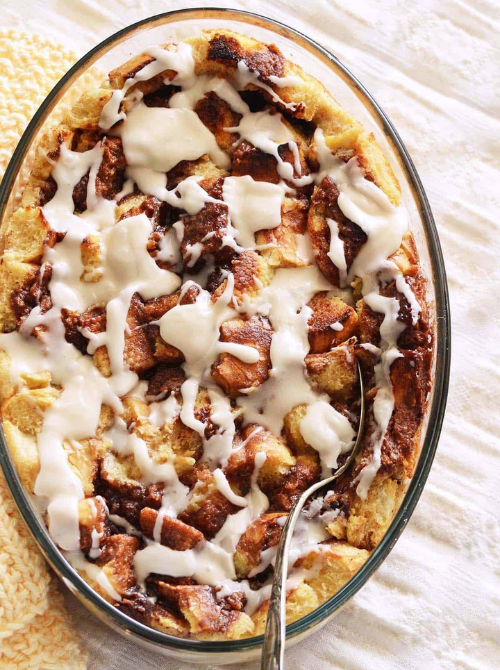
Why It’s Worth Making
- This is the nostalgia pick — it delivers the full cinnamon roll experience without requiring you to make actual cinnamon rolls.”
- What makes this casserole different from every other Easter brunch recipe I’ve seen? It replicates the flavor of a cinnamon bun — gooey swirl, custardy interior, and rich frosting on top — without any yeast, dough kneading, or special skill, built entirely from bread pudding technique.
- How much will this actually cost me to make? Comes in around $6–9 total.
- How far ahead can I make this — and what’s my best prep path? Assemble the night before (or even just 1 hour ahead), refrigerate, then bake in the morning — the longer soak actually deepens the cinnamon flavor, so overnight is the preferred prep path.
- How long does it take, and how hard is it really? About 10 minutes active the night before to assemble, then 30–40 minutes of baking in the morning — making the frosting takes 5 additional minutes while it cools, and that’s the most complex step.
- Can I make this work for everyone at my table? Use dairy-free milk and plant-based butter for a DF version; the bread is the main gluten variable, so a GF loaf makes it gluten-free — the custard ratio and technique stay exactly the same.
- Will this look impressive enough to set on an Easter brunch table? The drizzled frosting over a golden, puffed top makes it look bakery-display worthy — it’s visually distinct from every other dish on the table and smells exactly like fresh cinnamon rolls baking.
- What do I do with leftovers? Store covered up to 4 days refrigerated or up to 1 month frozen; reheat covered with foil in a 350°F oven for the best texture, or microwave individual slices for 30–45 seconds.
- What’s the one thing I need to know to make sure this turns out perfectly? Use truly stale or day-old bread — fresh soft bread won’t soak up the custard properly and will result in a wet, dense interior; if your bread is fresh, cube it and leave it uncovered on the counter for 2–3 hours before assembling.
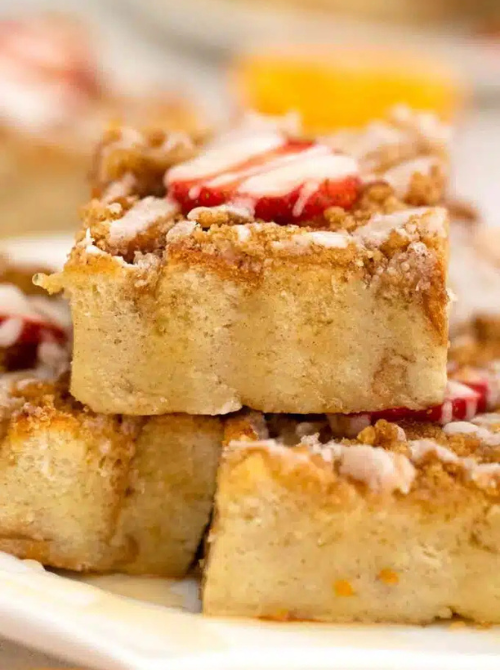
Why It’s Worth Making
- This is the leftover-bread pick — the practical choice that transforms into the most crowd-pleasing dish on the Easter table.
- What makes this casserole different from every other Easter brunch recipe I’ve seen? It’s built on sourdough bread specifically, which gives it a subtly tangy, complex flavor base that plain white or brioche French toast casseroles can’t replicate — and it’s the easiest leftover-bread solution in this lineup.
- How much will this actually cost me to make? The total is roughly $8–11 for a full 9×13 pan — one of the most budget-friendly sweet casseroles here.
- How far ahead can I make this — and what’s my best prep path? Assemble in 30 minutes the night before, refrigerate, and bake fresh in the morning — it can also be frozen unbaked for up to 2 months, then thawed overnight and baked as directed.
- How long does it take, and how hard is it really? 30 minutes of active prep the night before (cubing bread, whisking custard), then 45–60 minutes of hands-off baking — about as easy as a sweet casserole gets.
- Can I make this work for everyone at my table? Use any sturdy GF bread for a gluten-free version; swap cream for oat milk and use dairy-free butter for a DF adaptation — the custard still sets correctly with plant-based substitutions.
- Will this look impressive enough to set on an Easter brunch table? The golden, slightly caramelized top with visible bread chunks gives it a rustic, impressive look — serve with fresh berries and a dusting of powdered sugar for a spring-appropriate finish.
- What do I do with leftovers? Refrigerate up to 3 days; reheat in the microwave or in a 350°F oven covered with foil — slices also freeze well individually for a quick weekday breakfast that reheats in under 2 minutes.
- What’s the one thing I need to know to make sure this turns out perfectly? Your bread must be stale or pre-dried — soft fresh bread won’t absorb the custard properly and will turn to mush overnight; if using fresh bread, cube it and dry it in a 200°F oven for 10 minutes first.
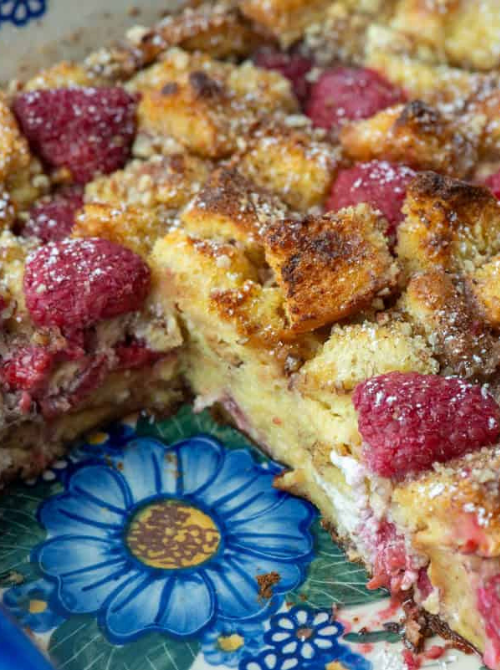
Why It’s Worth Making
- This is stunning enough to anchor an Easter brunch table and tastes far more sophisticated than its effort level suggests.
- What makes this casserole different from every other Easter brunch recipe I’ve seen? Tart raspberries, creamy goat cheese, and crunchy pecans baked into a custard-soaked brioche base — it’s the only French toast casserole in this roundup with a savory-leaning cheese element that creates unexpected flavor complexity.
- How much will this actually cost me to make? Brioche and goat cheese are the two premium ingredients here; expect $14–18 total.
- How far ahead can I make this — and what’s my best prep path? Assemble the night before, cover, and refrigerate — in the morning, pop it directly into a preheated oven with no additional prep needed.
- How long does it take, and how hard is it really? 15 minutes active prep the night before — cube brioche, scatter berries and pecans, whisk and pour custard — then 35–45 minutes of baking; one of the simplest assemblies in this section.
- Can I make this work for everyone at my table? Swap goat cheese for cream cheese for a milder flavor; omit the pecans for nut-free guests; use blueberries instead of raspberries (noted to work beautifully by a reader); gluten-free brioche works as a straight swap.
- Will this look impressive enough to set on an Easter brunch table? Absolutely — the jewel-toned raspberries visible through a golden, puffed top make this the most visually striking sweet casserole in this roundup, and it photographs beautifully with zero styling effort.
- What do I do with leftovers? Store in an airtight container up to 3–4 days refrigerated; reheat in the microwave or covered in a low oven — the goat cheese pockets soften further on day two, which many people prefer.
- What’s the one thing I need to know to make sure this turns out perfectly? Make sure the brown sugar goes into the egg custard mixture, not sprinkled on top separately — one reader confirmed this is an easy-to-miss step that affects the sweetness distribution throughout the dish.

Why It’s Worth Making
- This is the hands-on, kid-friendly pick and gives Easter brunch a farmers market vibe.
- What makes this casserole different from every other Easter brunch recipe I’ve seen? It’s not a casserole at all — it’s individually portioned baked fritters with a two-stage glazing and broiling finish that creates a caramelized, slightly crisp exterior that no other sweet recipe in this roundup delivers.
- How much will this actually cost me to make? Expect $5–7 for 12 fritters, making this the most affordable sweet option per serving in the entire roundup at roughly $0.50 each.
- How far ahead can I make this — and what’s my best prep path? These are best baked the morning of for peak texture — the glaze-and-broil finish needs to happen fresh; however, the dry ingredients can be pre-measured and the apple diced the night before to cut morning prep to under 10 minutes.
- How long does it take, and how hard is it really? About 15 minutes active (mixing, scooping, glazing), then 10–12 minutes baking plus 2–4 minutes under the broiler — the fastest recipe in this entire roundup from start to plated.
- Can I make this work for everyone at my table? Naturally dairy-free if using oil instead of butter; use a 1:1 GF flour blend for gluten-free guests; the apple-spice flavor profile has universal appeal and is the most kid-friendly sweet option in this section.
- Will this look impressive enough to set on an Easter brunch table? The glossy glaze over golden, irregularly shaped fritters looks rustic and bakery-style — arrange on a tiered stand or wooden board for maximum visual impact; they look like something from a spring farmers market.
- What do I do with leftovers? Best eaten the day of for peak texture; store uncovered at room temperature up to 1 day or refrigerated up to 3 days — reheat in a 300°F oven for 8–10 minutes to partially revive the exterior crispness.
- What’s the one thing I need to know to make sure this turns out perfectly? Pour the oil into the muffin cups before adding the batter — it’s the key to the fritter’s signature caramelized outer crust; skipping or reducing this step produces a muffin, not a fritter.
Hearty Brunch Bakes
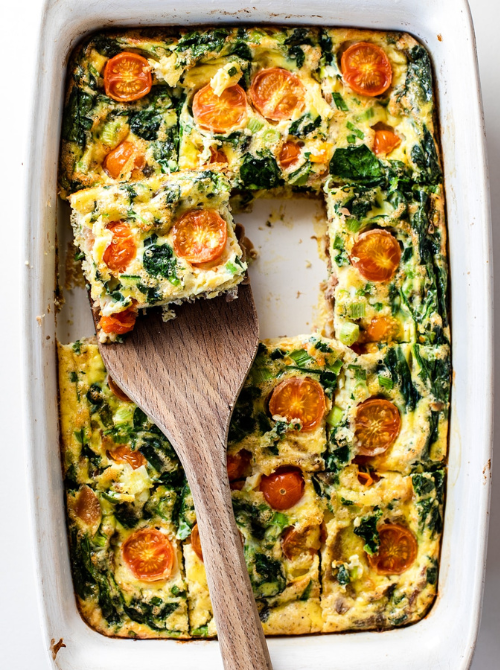
Why It’s Worth Making
- This is the elegant pick that looks like it required skill making it the most impressive-to-effort-ratio recipe.
- What makes this casserole different from every other Easter brunch recipe I’ve seen? Only 6 ingredients — smoked salmon, eggs, spinach, grape tomatoes, green onion, and spices — and the whole grape tomatoes placed on top before baking become the visual star of the dish without any plating work.
- How much will this actually cost me to make? Smoked salmon is the premium ingredient; a 4 oz package runs $5–8, but it flavors the entire dish — the total lands around $12–16 for a 9×13 pan, and ham is noted as a direct swap that brings cost down significantly.
- How far ahead can I make this — and what’s my best prep path? Wilt the spinach the night before, cool, and refrigerate — then morning assembly is just whisking eggs, combining everything, pouring, topping with tomatoes, and baking for 20–25 minutes.
- How long does it take, and how hard is it really? About 10 minutes active prep (wilting spinach, whisking eggs, chopping salmon), then 20–25 minutes baking — the shortest total time of any savory casserole in this roundup.
- Can I make this work for everyone at my table? Naturally gluten-free, dairy-free, and low-carb; swap smoked salmon for ham, breakfast sausage, or fresh cooked salmon; use frozen spinach (thawed and squeezed dry) in place of fresh for a faster, cheaper prep.
- Will this look impressive enough to set on an Easter brunch table? The single layer of halved grape tomatoes on top creates a visually elegant, almost restaurant-style presentation that looks far more intentional than its 6 ingredients suggest.
- What do I do with leftovers? Reheat in a warm oven for 10–15 minutes or microwave individual servings — stores well refrigerated and the flavor actually deepens slightly on day two as the salmon infuses the egg further.
- What’s the one thing I need to know to make sure this turns out perfectly? Cook the spinach and set it aside to cool before adding it to the egg mixture — hot spinach added directly to raw eggs begins cooking them unevenly before the dish even reaches the oven.
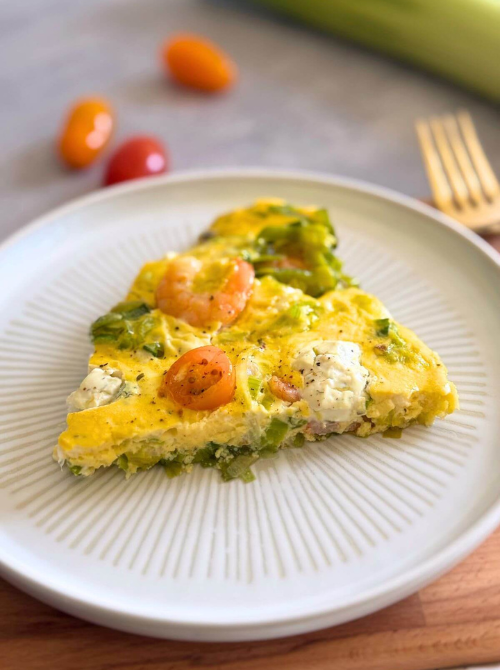
Why It’s Worth Making
- This is the special occasion pick and it takes less than 20 minutes to make.
- What makes this casserole different from every other Easter brunch recipe I’ve seen? Shrimp and leeks in a frittata is a combination that reads as genuinely special occasion — the sweetness of the shrimp against the mild, buttery leeks creates a flavor profile that feels distinctly more restaurant-worthy than any egg casserole on this list.
- How much will this actually cost me to make? Frozen shrimp (thawed) keeps cost manageable — a 12 oz bag runs $6–9, bringing the total to roughly $12–15 for 4–6 servings.
- How far ahead can I make this — and what’s my best prep path? Prep the leeks and shrimp the night before and refrigerate separately — morning assembly takes under 5 minutes before cooking, and the full frittata comes together in 20 minutes start to finish.
- How long does it take, and how hard is it really? About 20 minutes total — 5 minutes sautéing leeks, 1 minute with the shrimp, then stovetop and broiler finish; it’s the fastest hot recipe in this entire roundup to make morning-of.
- Can I make this work for everyone at my table? Naturally gluten-free and low-carb; swap cream cheese for a dairy-free alternative for a DF version; omit shrimp and double the leeks for a vegetarian frittata that still has excellent depth of flavor.
- Will this look impressive enough to set on an Easter brunch table? A golden, puffed frittata served directly from a cast iron skillet is one of the most visually striking ways to present eggs — the pink shrimp visible through the set egg top makes it unmistakably special.
- What do I do with leftovers? Store refrigerated up to 3 days; reheat individual slices in a 350°F oven for 8–10 minutes — freezing is not recommended as the shrimp can become rubbery on thaw.
- What’s the one thing I need to know to make sure this turns out perfectly? Cook shrimp just until they turn pink (about 1 minute) before adding the egg mixture — they’ll continue cooking under the broiler, and overcooked shrimp going into the frittata will be tough and rubbery by the time it’s served.
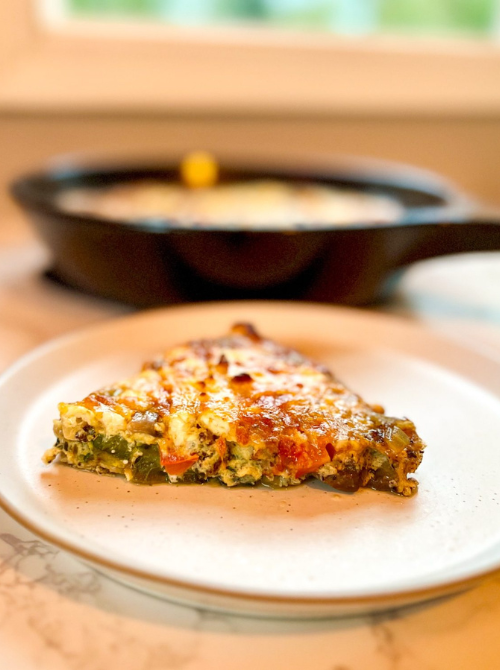
Why It’s Worth Making
- This is the one-pan no-excuses pick with less cleanup explicitly designed for freezing individual portions.
- What makes this casserole different from every other Easter brunch recipe I’ve seen? Everything — browning the sausage, sautéing the vegetables in the leftover flavorful bits, and broiling the finished top — happens in a single oven-safe skillet, which means the frittata carries all the layered flavor from one pan with minimal cleanup.
- How much will this actually cost me to make? Ingredients come in around $12–16 — the feta is optional but its saltiness and tang make the dish notably more interesting.
- How far ahead can I make this — and what’s my best prep path? Bake, cool completely, slice, and freeze individual portions in an airtight container for up to 3 months — this is explicitly noted as the recommended make-ahead path, and frozen portions reheat well in the microwave.
- How long does it take, and how hard is it really? About 15 minutes active prep (browning sausage, sautéing vegetables in the same pan), then 20–25 minutes baking plus 1–2 minutes under the broiler — one pan, straightforward technique, easy cleanup.
- Can I make this work for everyone at my table? Skip the sausage and double the vegetables (mushrooms recommended for umami depth) for a vegetarian version; use dairy-free cheese and coconut cream for DF — the one-pan technique works identically regardless of swaps.
- Will this look impressive enough to set on an Easter brunch table? The broiled, golden-brown top with visible feta and cheese crust makes it look exactly like something from a weekend brunch restaurant — serve directly from the skillet for a rustic, intentional presentation.
- What do I do with leftovers? Freeze individual slices for up to 3 months — this is actually the design intent of the recipe, and frozen slices reheat in 1–2 minutes in the microwave for a ready-made weekday breakfast long after Easter.
- What’s the one thing I need to know to make sure this turns out perfectly? Watch for the eggs to stop jiggling and start to puff slightly before pulling from the oven — that puff is the visual cue the eggs are perfectly set, and the broil step immediately after gives the golden top without overcooking the interior.
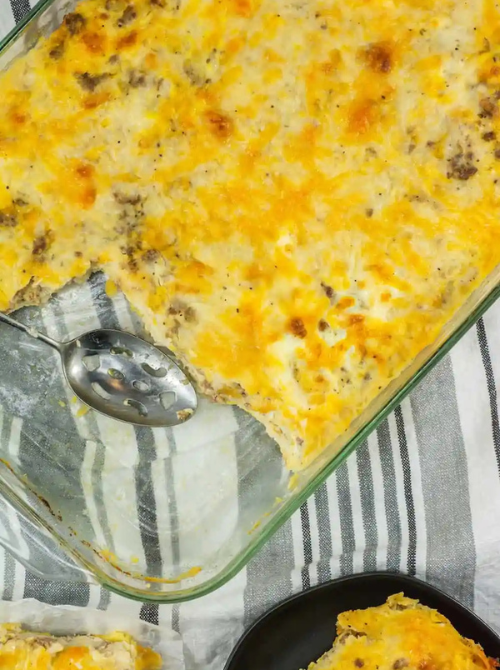
Why It’s Worth Making
- This is the comfort-food crowd-pleaser and the one most likely to get requests from the table for the recipe.
- What makes this casserole different from every other Easter brunch recipe I’ve seen? It layers all the components of biscuits and gravy — refrigerated biscuit dough on the bottom, browned sausage, egg custard, poured gravy, melted cheese on top — into one baked dish that does the work of four separate breakfast items.
- How much will this actually cost me to make? The total is roughly $12–15 for 12 servings — about $1.25 per serving.
- How far ahead can I make this — and what’s my best prep path? This is one of the few recipes best assembled and baked fresh — but it can be prepped for freezing: bake completely, wrap tightly, freeze up to 2 months, thaw overnight in the fridge, and reheat covered in the oven.
- How long does it take, and how hard is it really? 20 minutes active prep (browning sausage, whisking eggs, making the gravy), then 30–40 minutes of baking — the gravy needs constant whisking for about 3 minutes, but that’s the only technique required.
- Can I make this work for everyone at my table? Swap pork sausage for turkey or chicken sausage; use your preferred shredded cheese variety (pepper jack for heat, mozzarella for a milder version); make homemade gluten-free biscuits and GF gravy for a full GF adaptation.
- Will this look impressive enough to set on an Easter brunch table? The bubbling cheese crust over visible gravy is a visual that reads as hearty, indulgent comfort food — garnish with a sprinkle of fresh parsley or cracked black pepper to elevate the presentation slightly.
- What do I do with leftovers? Store up to 2 days refrigerated; reheat in the microwave or covered in the oven — the biscuit base softens on day two, which some people prefer, though it won’t be as distinct a layer as when freshly baked.
- What’s the one thing I need to know to make sure this turns out perfectly? Whisk the gravy mix constantly over medium-high heat and pull it off immediately once thickened — it scorches fast, and thin gravy will make the casserole watery while overcooked gravy won’t spread to the edges properly.
The Make-Ahead Timeline: What to Do When
Every recipe in this roundup fits into one of four prep windows — find yours and work backwards from Easter morning.
👉 Most of these recipes are flexible across more than one prep window — the placement below reflects the best or most commonly recommended path, not the only one. Check the individual recipe notes for the full range of make-ahead options.
- Day of (under 30 minutes active): The shrimp and leek frittata, sausage and veggie frittata, and baked apple fritters are all fast enough to make Easter morning without stress — assemble and bake while guests are arriving.
- Night before (the sweet spot): The overnight breakfast casserole with bacon, egg sausage casserole, sourdough French toast bake, overnight pancake casserole, and ham and cheese sourdough casserole all require an overnight rest in the fridge — assemble Saturday night, bake Sunday morning, done.
- 2–3 days ahead: The quiche, smoked salmon casserole, high protein breakfast casserole, and baked oatmeal can all be baked in full 2–3 days before Easter, refrigerated, and reheated in a low oven with no quality loss — the best option if you want zero morning effort.
- Freeze-ahead (weeks out): The lazy quiche with sausage and peppers, overnight pancake casserole, sausage and veggie frittata, and cinnamon bun bread pudding all freeze well either assembled unbaked or fully baked — pull from the freezer the night before Easter and bake or reheat as directed.
How to Avoid the Most Common Casserole Mistakes
None of these mistakes are fatal — they’re just worth knowing about before you start. A little heads-up goes a long way.
- Using fresh bread instead of stale or dried: Fresh soft bread turns to mush overnight because it can’t absorb the custard without collapsing. Use day-old bread, or cube fresh bread and leave it uncovered on the counter for a few hours — or dry it in a 200°F oven for 10 minutes. Stale bread isn’t a compromise, it’s actually the better ingredient here.
- Skipping the overnight soak: It’s tempting to assemble and bake the same day, but most bread-based casseroles need that full rest in the fridge to let the custard absorb evenly. An hour isn’t enough. If you’re short on time, check the individual recipe notes — a handful in this roundup are genuinely flexible, but most aren’t.
- Adding hot filling to cold eggs: If you’ve just browned sausage or sautéed vegetables, let them cool for 10 minutes before combining with your egg mixture. Hot filling starts cooking the eggs unevenly before the dish even hits the oven, and the result is a rubbery, uneven texture that no amount of baking will fix.
- Not preheating the oven fully: Putting a cold casserole into an oven that hasn’t fully reached temperature is one of the most common causes of a soggy, undercooked center. Give your oven a full 15–20 minutes to preheat — not just until the preheat light goes off.
- Overbaking or pulling it too early: For egg-based casseroles, insert a knife in the center — it should come out clean with no wet egg. For custard-heavy dishes, look for a slight jiggle in the very center that firms up as it cools. When in doubt, give it five more minutes covered with foil to finish without over-browning the top.
- Scaling without adjusting the custard ratio: Doubling a recipe means doubling everything — including the egg and liquid mixture. Adding extra bread or potatoes without scaling the custard is the most common scaling mistake, and it leaves you with dry spots and uneven texture. Keep the ratio consistent and you’ll be fine.
What to Serve Alongside Your Casserole
The casserole is doing the heavy lifting, so everything else on the table should be effortless. Here’s what actually works — all of it budget-friendly, none of it boring:
- A spring produce board: Strawberries, radishes, and asparagus are all at peak season and peak affordability in April. Arrange them on a board with a small bowl of hummus or a simple lemon vinaigrette for dipping and you have a side that looks styled without being fussy. Four minutes, maximum.
- Warmed grocery store croissants with lemon curd: Pick up a bag on the way home Saturday, warm them in the oven for 8 minutes while the casserole rests, and set them out with a jar of lemon curd. They taste bakery-fresh, cost about $4, and make the whole table look like you planned it that way.
- A simple self-serve drink station: A pot of good coffee, a pitcher of juice, and a bottle of prosecco if that’s your crowd. Set it up before guests arrive and it keeps people happy while the casserole finishes — and it costs almost nothing extra to put together.
Easter Brunch Planning Checklist
🛒 Shopping (Thursday or Friday)
- Choose your casserole(s) and pull the ingredient list
- Buy bread, potatoes, or biscuits — day-old bread is ideal and cheaper
- Pick up eggs, milk, and cheese in bulk if feeding 12+
- Grab your protein (sausage, ham, smoked salmon) — store-brand saves $2–4
- Add spring produce for the side board (strawberries, asparagus, radishes)
- Grab a bag of grocery store croissants and a jar of lemon curd
- Pick up juice and prosecco for the drink station if needed
- Total budget check: most single casseroles land at $10–16 all-in
🥘 Night Before (Saturday)
- Cube and dry bread if your recipe calls for it
- Brown any sausage or bacon and let it cool completely before assembling
- Assemble casserole, cover tightly, and refrigerate
- Mix and refrigerate any separate toppings (streusel, cheese) in a small bowl
- Set out your baking dish, oven mitts, and serving utensils so morning is smooth
- Prep the produce board ingredients — wash, dry, and refrigerate
☀️ Morning Of
- Pull casserole from fridge 20–30 minutes before baking to take the chill off
- Preheat oven fully — give it 15–20 minutes, not just until the light goes off
- Add any reserved toppings (cheese, streusel) before sliding into the oven
- Set the drink station while the casserole bakes
- Warm croissants during the last 8 minutes of the casserole’s bake time
- Rest the casserole 5–10 minutes before cutting — it slices cleaner and sets properly
🌸 Table Setup
- Arrange the produce board and set out hummus or lemon vinaigrette
- Set out lemon curd alongside the warmed croissants
- Label any casseroles with dietary notes (GF, DF, V) if guests have restrictions
- Put out serving utensils, small plates, and napkins before guests arrive
- Set the drink station with cups, ice, and a small sign if you’re doing self-serve
Final Thoughts
There’s no reason Easter brunch should cost a fortune or eat up your entire morning — a little prep the night before and a casserole that works hard for you is genuinely all it takes. I’d love to know which recipe you land on, so drop a comment below and let me know how it goes. And if you want to save this for later, pin it to your Easter board so it’s easy to find when you need it.