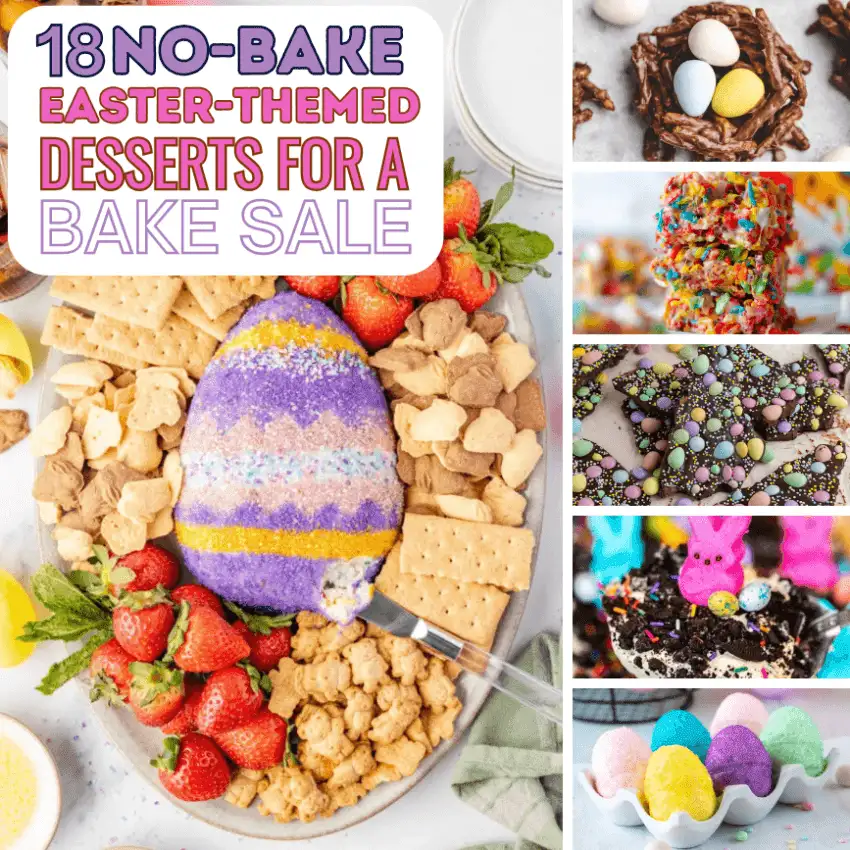
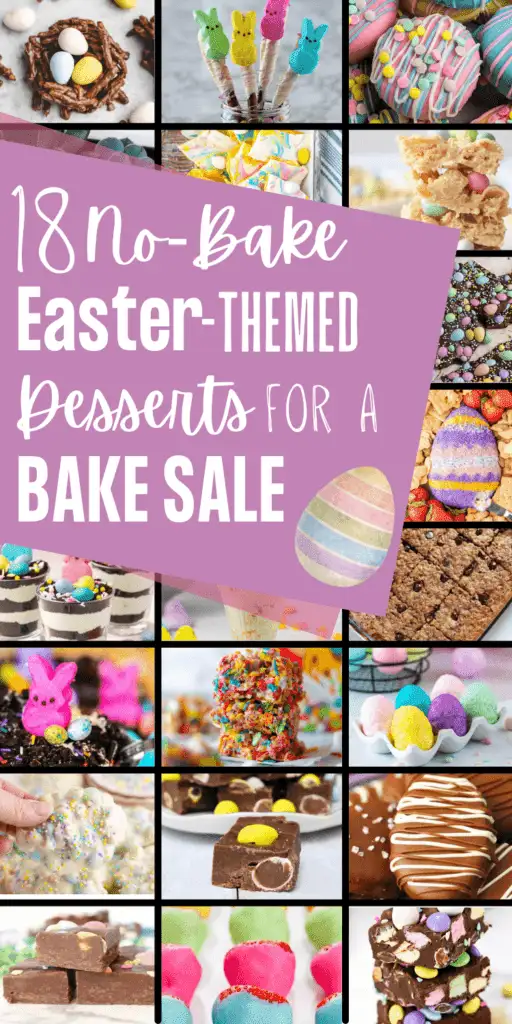
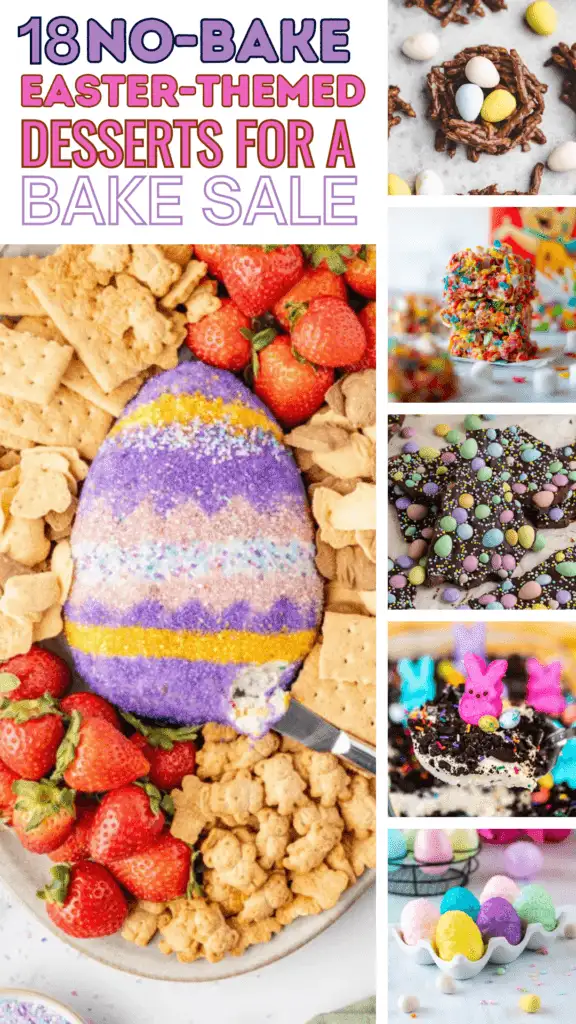
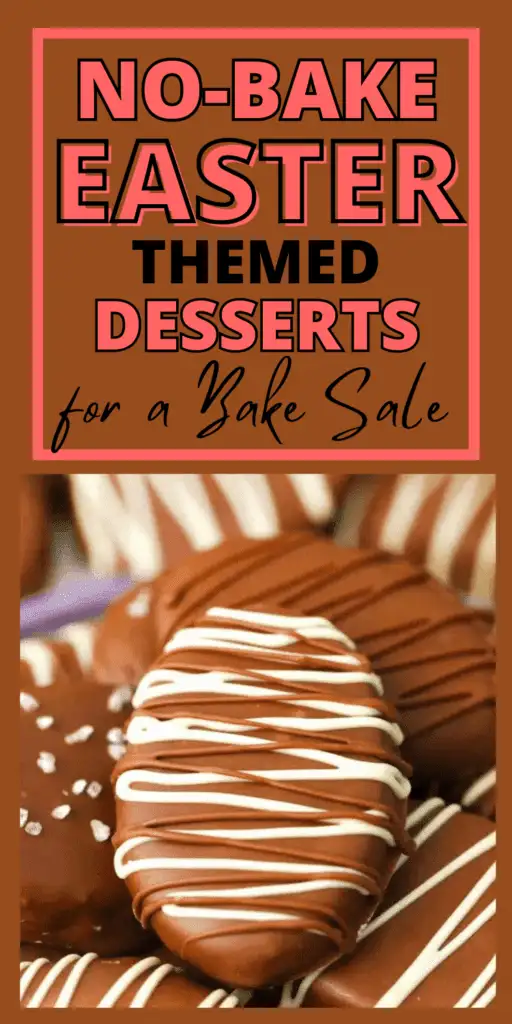
Over eighteen no-bake Easter desserts later, I can tell you exactly which ones sell out first at a bake sale and which ones are still sitting on the table at the end of the day. Spoiler: the difference almost never comes down to taste.
This collection covers the ones worth making — pastel fudge squares, chocolate covered Oreos, bird’s nest cookies, and more. Every recipe is Easter-themed, kid-friendly, and oven-free. More importantly, every single one is easy to batch, easy to package, and easy to price for a real fundraising margin rather than just breaking even.
Each recipe also comes with a quick breakdown: how long it takes, how many pieces one batch makes, what it costs, whether it needs refrigeration, and how to package it. Most can be made a day ahead so you’re not scrambling the morning of the sale.
TOO BUSY TO READ NOW?
PIN IT FOR LATER TO YOUR FAVORITE PINTEREST BOARD
Why No-Bake Treats Are a Bake Sale Advantage
Without an oven in the equation, you can run multiple batches back to back — no timing, no waiting for pans to cool — which matters a lot when you’re trying to fill a table. Most recipes rely on inexpensive staples like chocolate chips, marshmallows, cereal, and cream cheese, keeping your cost per batch low and your fundraising margin high.
There’s also a durability factor that most people overlook. No-bake treats hold their shape better than frosted cakes or delicate cookies on a bake sale table. A tray of pastel Easter treats looks just as good at the three-hour mark as it did at the start.
What Makes a No-Bake Dessert “Bake Sale Ready”
Not every no-bake dessert is automatically a good fit for a bake sale table. Before I commit to a recipe, I run it through a quick mental checklist — and every single recipe in this post passes all four:
✅ It can be sold by the piece. No slicing, cutting, or serving equipment needed at the table day of the bake sale — each treat is already portioned and ready to hand off.
✅ It holds its shape at room temperature. A treat that melts, slumps, or falls apart after an hour on a table is a liability, not an asset.
✅ It’s easy to package. The best bake sale treats can be dropped into a cellophane bag or small container, sealed with a ribbon, and priced with a tag in under a minute.
✅ It makes sense for your budget. Every recipe here can be made for under $15 a batch and priced to generate a meaningful fundraising margin — because the point is to raise money, not just break even.
✨ Transparency Matters
Some links in this post may be affiliate links. That means I may earn a small commission — including as an Amazon Associate — at no extra cost to you.
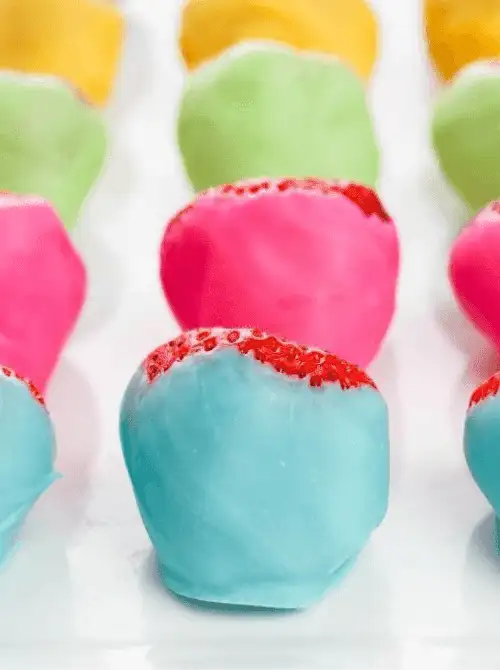
Just 2 ingredients and the rainbow of pastel colors does all the selling for you.
What makes this a standout bake sale pick? No other treat on the table will stop browsers in their tracks the way a tray of rainbow-coated strawberries will.
What does it taste like, and who will grab it first? Sweet candy shell with fresh juicy strawberry inside — appeals to everyone but especially kids and fruit lovers.
How long does it take and how many does one batch make? 50 minutes total; 2 lbs of strawberries yields approximately 25–30 pieces depending on size.
What does it cost and what should I charge? About $8–10 per batch — sell at $2.00–2.50 each for strong margin.
Will it hold up on the table? Best made day-of and kept at room temperature — avoid refrigerating as condensation will soften the coating.
Any allergy concerns to flag? Naturally nut-free ✅; check your candy melt brand for dairy and allergen info.
How do I package it? 2 per clear treat bag lined with Easter grass, or display on a tray and sell individually.
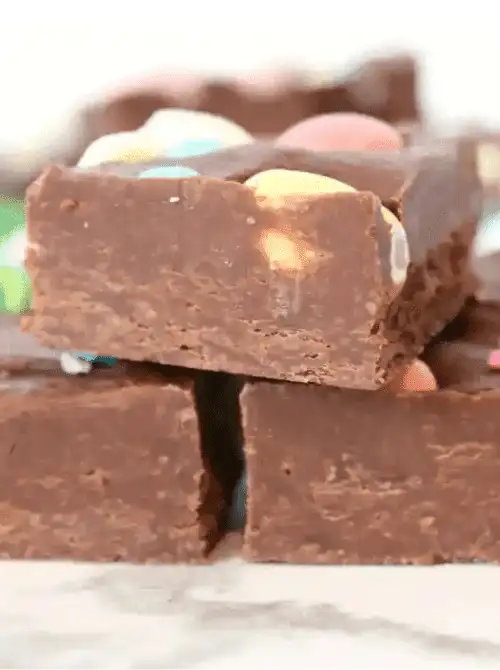
This is the most customizable fudge recipe in the lineup, and it’s ready in just 5 minutes of active prep.
What makes this a standout bake sale pick? Fully customizable toppings mean you can match it to any Easter theme or use up leftover candy you already have.
What does it taste like, and who will grab it first? Classic semi-sweet chocolate fudge — familiar and crowd-pleasing for kids and adults alike.
How long does it take and how many does one batch make? 5 minutes active, 2 hours to set, yields 16 two-inch pieces.
What does it cost and what should I charge? About $7–9 per batch — sell at $1.25–1.50 per square.
Will it hold up on the table? Store in the refrigerator up to 5 days — keep in a cooler at the sale if the event runs long.
Any allergy concerns to flag? Contains dairy; naturally nut-free ✅ depending on your candy mix-ins — check toppings carefully.
How do I package it? 2–3 squares in a cellophane bag; swap toppings by color or candy type to create variety across bags.
These are the homemade version of the Easter candy everyone already loves.
What makes this a standout bake sale pick? Peanut butter eggs are one of the most recognized and craved Easter treats — buyers know exactly what they’re getting and will reach for them immediately.
What does it taste like, and who will grab it first? Creamy, sweet peanut butter with a milk chocolate shell — peanut butter lovers and nostalgic candy fans of all ages.
How long does it take and how many does one batch make? 30 minutes active, 2.5 hours to chill, yields 18 sweet eggs.
What does it cost and what should I charge? Under $10 per batch — sell at $1.50–2.00 each or 2 for $3.
Will it hold up on the table? Yes — chocolate coating keeps them stable at room temp for several hours.
Any allergy concerns to flag? Contains peanuts ⚠️ and dairy — swap SunButter for a nut-free version; label clearly at the table.
How do I package it? Individual eggs in a small clear bag with a bow, or 2 per bag for a $3 price point.
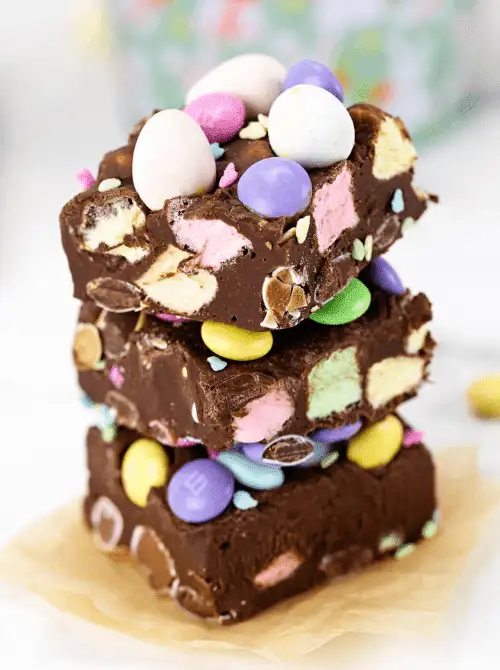
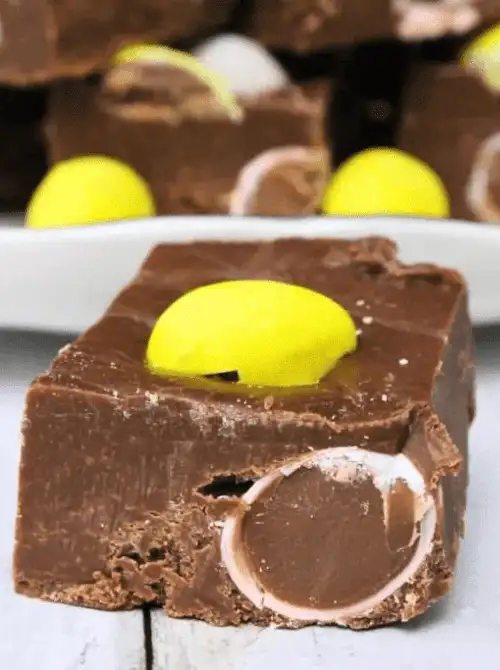
Just 3 ingredients and 10 minutes of active prep — this is the easiest fudge recipe in the lineup.
What makes this a standout bake sale pick? Only 3 ingredients means the lowest prep barrier of any fudge here — and the Mini Eggs make it look like you spent hours on it.
What does it taste like, and who will grab it first? Creamy milk chocolate fudge with candy-shell crunch — kid and adult friendly in equal measure.
How long does it take and how many does one batch make? 10 minutes active, 3 hours to set, yields 16 servings.
What does it cost and what should I charge? About $9–12 per batch (Mini Eggs are the splurge) — sell at $1.50–2.00 per square.
Will it hold up on the table? Yes — stores well at room temperature once fully set.
Any allergy concerns to flag? Contains dairy; sub coconut condensed milk and dairy-free chocolate for a vegan version. Cadbury Mini Eggs may contain tree nuts — check label ⚠️
How do I package it? Individual squares wrapped in parchment or 2–3 per cellophane bag; the Mini Eggs on top make every piece look like a finished product.
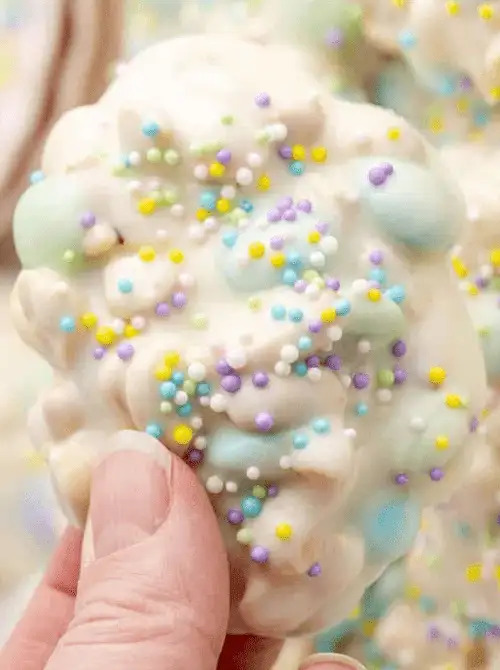
The slow cooker does all the work while you do everything else on your bake sale prep list.
What makes this a standout bake sale pick? The crockpot method frees up your hands entirely — highest yield-to-effort ratio of any recipe in this lineup.
What does it taste like, and who will grab it first? Sweet and salty white chocolate crunch — the pastel M&Ms make them look festive without any extra decorating.
How long does it take and how many does one batch make? 1 hour total (mostly hands-off), yields 18 clusters.
What does it cost and what should I charge? About $10–12 per batch — sell at $1.00–1.50 each or 4 for $4.
Will it hold up on the table? Yes — room temp up to 5 days; let M&Ms cool before adding so colors stay vibrant and don’t bleed.
Any allergy concerns to flag? Contains peanuts ⚠️ and dairy — swap sunflower seeds for a nut-free version; label clearly at the table.
How do I package it? 3–4 clusters per cellophane bag; use a cookie scoop while portioning to keep sizes uniform and bags consistent.
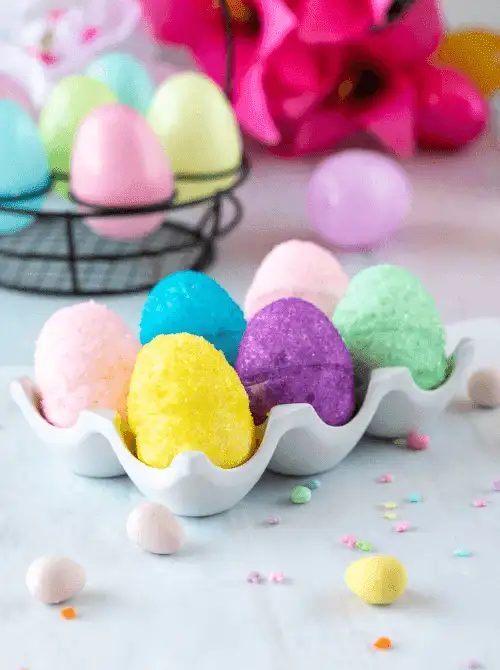
Surprisingly simple to pull off — and with 975 Pinterest repins, they’re proven to stop the scroll.
What makes this a standout bake sale pick? Homemade marshmallows look and feel premium — buyers perceive high value, which justifies a higher price point than most treats here.
What does it taste like, and who will grab it first? Light, pillowy, and sweet — a nostalgic Easter treat that appeals to kids and adults who grew up with Peeps but want something more special.
How long does it take and how many does one batch make? 30 minutes total, yields 12–16 eggs.
What does it cost and what should I charge? About $5–7 per batch — sell at $1.50–2.00 each given the premium homemade feel.
Will it hold up on the table? Yes — lasts 5–7 days in an airtight container at room temperature.
Any allergy concerns to flag? Contains egg whites; naturally nut-free ✅; not vegan due to gelatin and egg whites.
How do I package it? Individual eggs in clear bags with a ribbon — add a sprinkle of pastel sugar for sparkle; use an old egg carton as a display tray at the table.
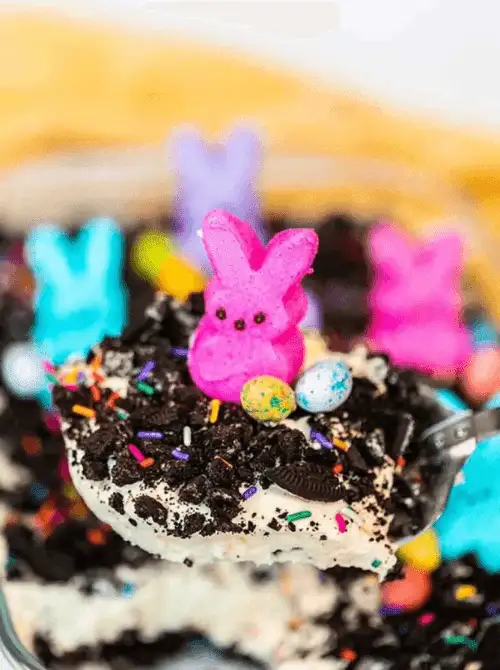
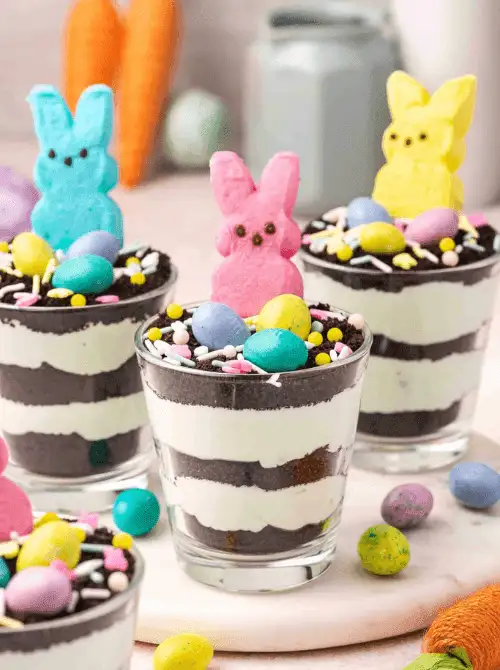
4.80 stars from 143 votes means this one is a proven crowd-pleaser.
What makes this a standout bake sale pick? The Peeps and Robin Eggs topping makes every cup look like a miniature Easter garden — zero extra decorating effort needed.
What does it taste like, and who will grab it first? Creamy vanilla pudding and cream cheese layered with crushed Oreos — nostalgic comfort food that kids and adults both recognize and love.
How long does it take and how many does one batch make? 15 minutes active, 3 hours to refrigerate, yields 12 servings.
What does it cost and what should I charge? About $10–13 per batch — sell individual cups at $2.00–3.00 each.
Will it hold up on the table? Needs to stay chilled — keep in a cooler and pull cups out as they sell ❌
Any allergy concerns to flag? Contains dairy and gluten; naturally nut-free ✅ — swap candy toppings freely based on what’s available.
How do I package it? Clear plastic cups with snap lids so the layers show through; add Easter candy toppers right before the sale to keep them fresh and colorful.
Kids will go absolutely wild for these — and honestly, so will adults.
What makes this a standout bake sale pick? The green pudding layer sets these apart visually from every other cup dessert on the table — no two treats look alike.
What does it taste like, and who will grab it first? Light, creamy pistachio pudding with Oreo crunch — a fun flavor twist that surprises people who expect chocolate and keeps them coming back.
How long does it take and how many does one batch make? 10 minutes active, 1 hour to chill, yields 8 six-ounce cups.
What does it cost and what should I charge? About $9–11 per batch — sell at $2.00–2.50 per cup.
Will it hold up on the table? Needs refrigeration — keep in a cooler and add Peeps and sprinkles just before selling to keep them fresh ❌
Any allergy concerns to flag? Contains dairy and gluten; pistachio pudding is flavored — no actual nuts in the mix ✅ but always confirm on the box label.
How do I package it? Clear 6oz cups with snap lids; store decorations separately and add toppers right before the sale for the best visual impact.
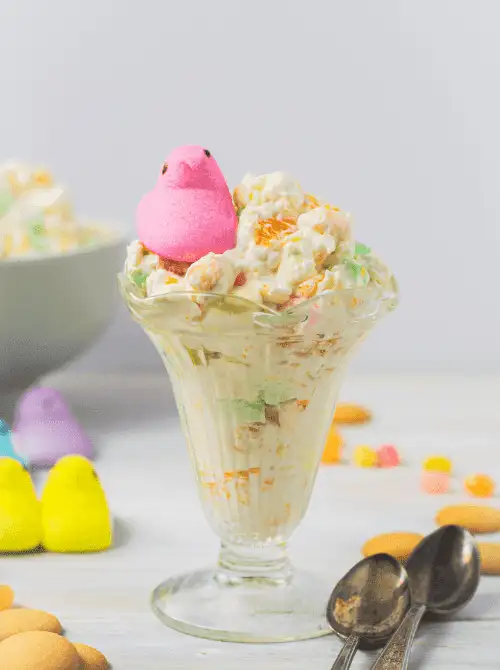
A light, fruity alternative to all the chocolate on your bake sale table. Top with Peeps or jelly beans and it’s instantly Easter.
What makes this a standout bake sale pick? The only fruit-forward dessert in the lineup — a refreshing option that gives buyers a reason to grab something beyond chocolate.
What does it taste like, and who will grab it first? Light, creamy, and tropical-sweet — appeals to anyone looking for something a little lighter after the heavier chocolate treats.
How long does it take and how many does one batch make? 20 minutes total, yields 8 servings.
What does it cost and what should I charge? About $7–9 per batch — sell individual cups at $2.00–2.50 each.
Will it hold up on the table? Needs refrigeration — stores up to 2–3 days in the fridge but tends to go watery over time; keep chilled and sell same day. Keep a cooler at the table and keep all but one in the cooler.❌
Any allergy concerns to flag? Contains dairy; naturally nut-free ✅ — drain canned fruit thoroughly or the mixture will become watery.
How do I package it? Small clear cups with lids; add a Peep or jelly bean topper right before the sale for a festive finishing touch.
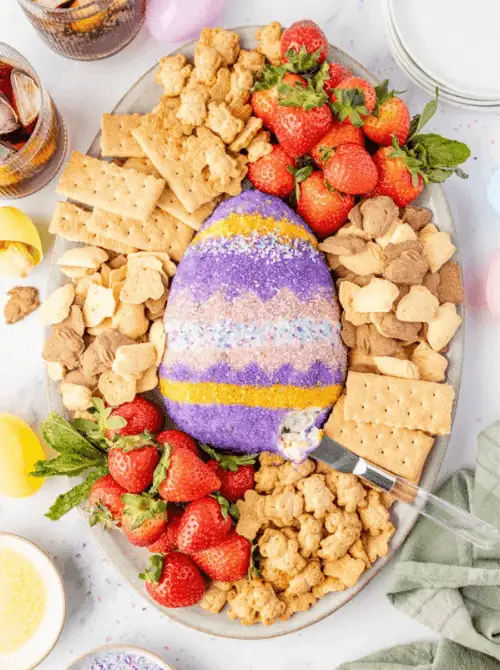
It’s the most unique and conversation-starting treat on this entire list.
What makes this a standout bake sale pick? Nobody expects a sweet cheese ball at a bake sale — the surprise factor alone makes it a table anchor that draws people in and sparks conversations.
What does it taste like, and who will grab it first? Sweet, creamy cheesecake flavor with a coconut and sprinkle coating — appeals to anyone who loves a cream cheese frosting or cheesecake dessert.
How long does it take and how many does one batch make? 20 minutes active, 2 hours to chill, serves 8 — or portion into 15–20 individual cups with graham cracker dippers.
What does it cost and what should I charge? About $8–10 per batch — sell individual cups at $2.50–3.00 each with graham crackers included.
Will it hold up on the table? Keep chilled — make up to 48 hours ahead for best flavor; table time should stay under 1 hour ❌
Any allergy concerns to flag? Contains dairy; naturally nut-free ✅ as written — optional nuts can be added but skip them for bake sale tables to keep it allergy-friendly.
How do I package it? Display one full cheese ball as your table centerpiece with a sign; pre-portion the rest into small cups with graham cracker sticks for individual sales.
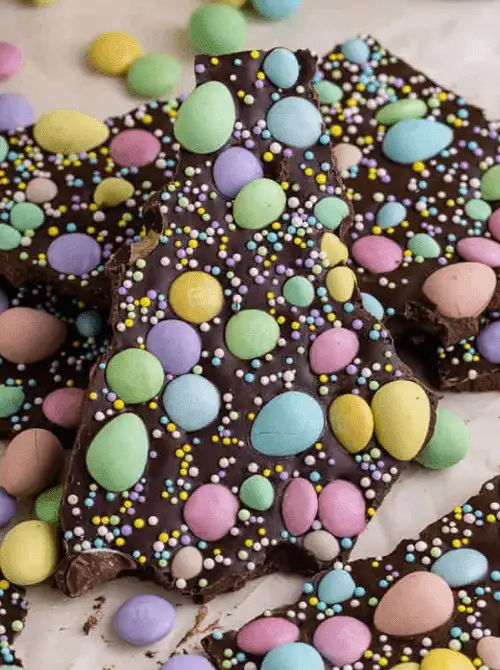
This is essentially Easter bark with a 5-ingredient simplicity that yields 20 pieces in just 1 hour.
What makes this a standout bake sale pick? The slab format means zero individual shaping or molding — pour, top, chill, and break apart into 20 ready-to-sell pieces.
What does it taste like, and who will grab it first? Rich dark or semi-sweet chocolate loaded with candy — a simple, crowd-pleasing treat that appeals to every chocolate lover at the table.
How long does it take and how many does one batch make? 15 minutes active, 40 minutes to set, yields 20 servings.
What does it cost and what should I charge? About $8–10 per batch — sell at $1.00–1.50 per piece or 3 for $3.50.
Will it hold up on the table? Yes — stores well at room temperature once fully set ✅
Any allergy concerns to flag? Contains dairy; naturally nut-free ✅ as written — confirm M&M variety and mini egg brand for cross-contamination warnings.
How do I package it? 2–3 broken pieces per cellophane bag — the irregular shapes and colorful candy topping make every bag look unique and handmade.
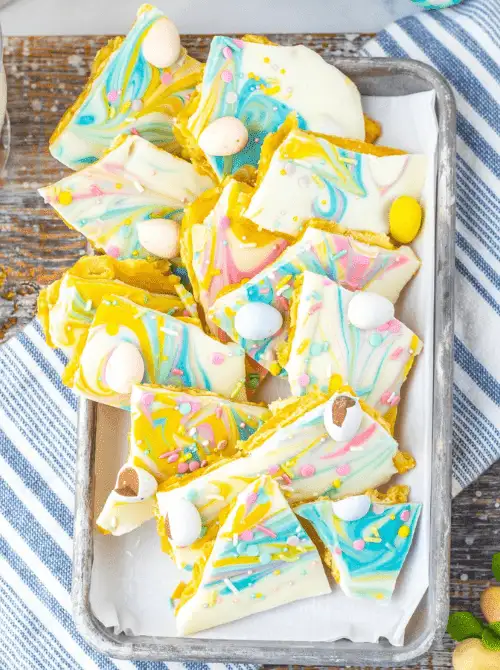
This is the sweet-and-salty wildcard that always surprises people and yields 28 pieces from one batch.
What makes this a standout bake sale pick? The sweet-salty combination hooks people who aren’t even looking for dessert — and 28 pieces per batch makes it one of the best value recipes in the lineup.
What does it taste like, and who will grab it first? Buttery toffee crunch with white chocolate and candy — appeals especially to adults who prefer less-sweet treats alongside the kids’ candy options.
How long does it take and how many does one batch make? 20 minutes active, 6 hours refrigeration, yields 28 servings.
What does it cost and what should I charge? About $12–15 per batch (candy melts add up) — sell at $1.00–1.50 per piece or 3 for $3.50.
Will it hold up on the table? Yes — room temperature up to 1 week in an airtight container ✅
Any allergy concerns to flag? Contains dairy and gluten (saltines); naturally nut-free ✅ as written — stovetop toffee step is adult-only.
How do I package it? 3–4 irregular pieces per bag — the colorful chocolate swirls and Cadbury eggs make every bag look artisan and handcrafted.
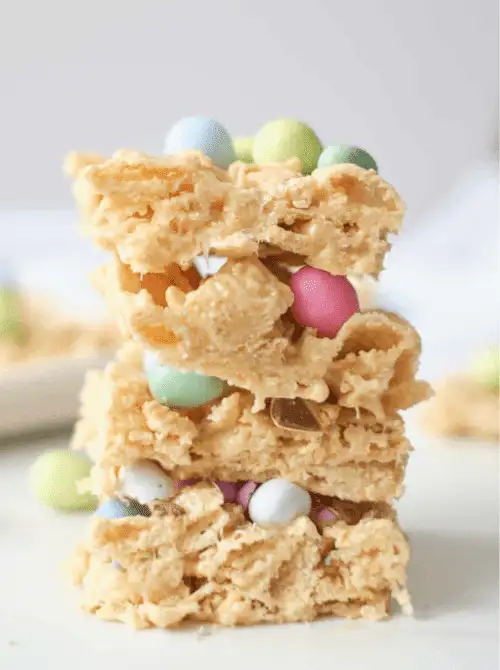
Four ingredients, 15 minutes of prep, and a 5-star rating from every reviewer.
What makes this a standout bake sale pick? Four pantry-friendly ingredients and the lowest cost-per-unit of any recipe in this lineup — your best margin maker.
What does it taste like, and who will grab it first? Sweet, buttery, and crunchy with pops of chocolate — a familiar rice krispie-style treat with an Easter twist that kids reach for instantly.
How long does it take and how many does one batch make? 15 minutes active, 2 hours to set, yields 12 bars.
What does it cost and what should I charge? About $5–7 per batch — sell at $1.00–1.50 per bar for an easy margin.
Will it hold up on the table? Yes — stores well at room temperature ✅
Any allergy concerns to flag? Contains dairy and gluten; check mini egg brand for nut cross-contamination warnings ⚠️
How do I package it? Wrap individual bars in parchment and seal with a pastel sticker, or stack 2 in a cellophane bag for a $2–3 price point.
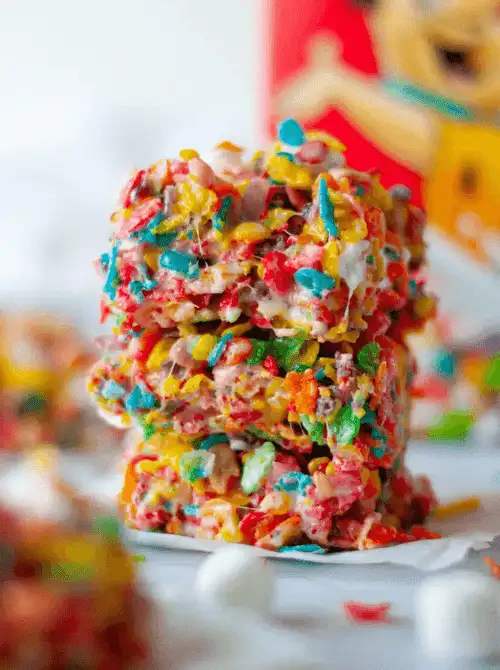
Three ingredients, 10 minutes of prep, and the rainbow colors of Fruity Pebbles make these bars the most visually distinctive treat on the table.
What makes this a standout bake sale pick? The natural rainbow colors do all the Easter branding for you — these stand out on a table full of chocolate without a single sprinkle added.
What does it taste like, and who will grab it first? Sweet, fruity, and chewy — a nostalgic cereal bar that kids recognize immediately and adults grab for the novelty.
How long does it take and how many does one batch make? 10 minutes active, 1 hour to cool, yields 20 servings.
What does it cost and what should I charge? About $5–7 per batch — sell at $1.00–1.50 per bar, one of the best margins in the lineup.
Will it hold up on the table? Yes — stores in an airtight container at room temperature for 3–5 days
Any allergy concerns to flag? Contains dairy and gluten; naturally nut-free ✅ — gently press into the pan (don’t smash) for soft, airy bars rather than dense ones.
How do I package it? Individual bars in a cellophane bag — the colorful cereal is visible through the bag and needs no additional decoration.
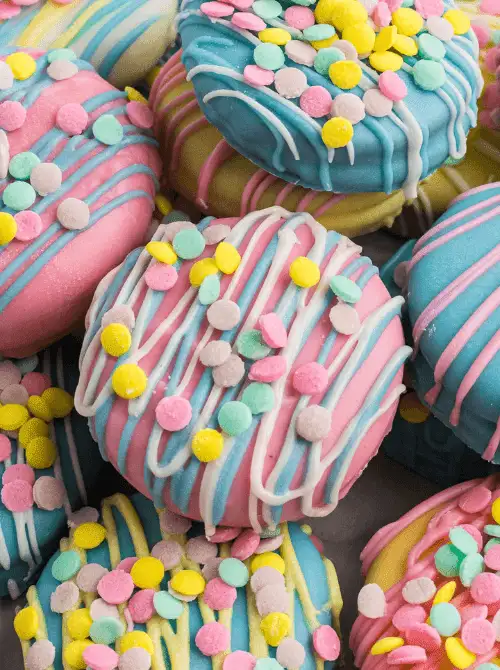
Rated 5 stars from 7 votes and one of the most popular bake sale items of any holiday.
What makes this a standout bake sale pick? Chocolate covered Oreos are one of the most consistently top-selling bake sale items year-round — the Easter color palette makes them impossible to walk past.
What does it taste like, and who will grab it first? Sweet white chocolate and candy coating over a classic Oreo — universally loved by kids and adults, and instantly recognizable.
How long does it take and how many does one batch make? 5 minutes active, 15 minutes to refrigerate, yields 16 decorated Oreos.
What does it cost and what should I charge? About $7–9 per batch — sell individually at $1.50 each or 3 for $4.
Will it hold up on the table? Yes — stores well at room temperature once set ✅
Any allergy concerns to flag? Contains gluten; Oreos are technically dairy-free but made in facilities with cross-contamination risk — naturally nut-free ✅ as written.
How do I package it? 2–3 per cellophane bag with a “Hoppy Easter” tag, or sell individually as a $1.50 impulse buy displayed flat on a tray.
Just 4 ingredients and 10 minutes of active prep these look adorable and yield 24 pieces per batch.
What makes this a standout bake sale pick? Standing upright in a mason jar filled with Mini Eggs, these are the most photogenic display item in the entire lineup — they do double duty as table décor and product.
What does it taste like, and who will grab it first? Sweet almond bark and salty pretzel with a sugary Peeps bunny on top — the sweet-salty combo and the cute factor make these a first-stop grab for parents buying for kids.
How long does it take and how many does one batch make? 10 minutes active, 1 hour to cool, yields 24 pretzel rods.
What does it cost and what should I charge? About $8–10 per batch — sell at $1.50–2.00 per rod.
Will it hold up on the table? Yes — do NOT refrigerate as moisture will soften the pretzels; room temperature only ✅
Any allergy concerns to flag? Contains gluten (pretzels) and dairy (almond bark); Peeps are naturally nut-free ✅ — confirm almond bark brand for allergen info.
How do I package it? Individual rods in narrow cellophane bags tied at the top, or stand upright in a jar of Mini Eggs as your table’s centerpiece display.
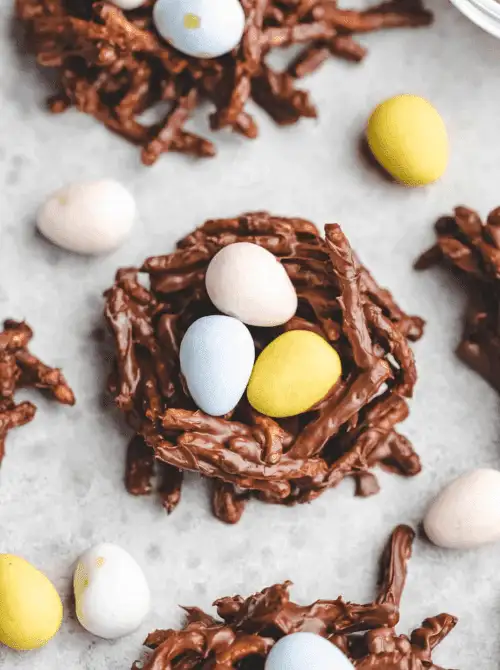
Three ingredients, 10 minutes, and 18 cookies — the most instantly recognizable Easter treat in this entire lineup.
What makes this a standout bake sale pick? Every buyer knows exactly what a bird’s nest cookie is the moment they see it — zero explanation needed, and the three candy eggs inside make every piece look finished and intentional.
What does it taste like, and who will grab it first? Rich chocolate and butterscotch with a satisfying crunchy noodle base — a nostalgic Easter classic that kids and adults both reach for on instinct.
How long does it take and how many does one batch make? 10 minutes total, yields 18 cookies.
What does it cost and what should I charge? About $7–9 per batch — sell at $1.50–2.00 each or 3 for $4.
Will it hold up on the table? Yes — stores well at room temperature ✅; use semisweet chips for a less-sweet version or milk chocolate for a crowd-pleasing sweeter nest.
Any allergy concerns to flag? Contains dairy; chow mein noodles contain gluten and may contain soy — naturally nut-free ✅ as written.
How do I package it? Individual nests in clear bags — the 3 candy eggs visible through the bag need no additional decoration or labeling to sell themselves.
Packaging Ideas That Sell (Easter Edition)
Packaging is the difference between a treat that gets noticed and one that gets passed over. You don’t need anything fancy — a cellophane bag, pastel ribbon, and a handwritten price tag can make even the simplest treat look intentional and worth buying.
Keep it clear. Clear cellophane bags let the treat sell itself without extra decoration.
Stick to a pastel palette. Yellow, lavender, pink, and mint ribbon ties signal Easter instantly.
Price every single item. Unpriced treats get passed over — buyers don’t want to ask. A small tag removes all hesitation.
Add toppers at the last minute. For cup desserts like dirt cups and pudding cups, add Peeps, Mini Eggs, and sprinkles right before the sale so they stay fresh and colorful.
Bundle for a better price point. Three fudge squares, three Oreos, or four candy clusters per bag moves more product and gives buyers a reason to spend a little more.
🐣
Pro Tip
Display one full Easter cheese ball front and center on your table with a sign and graham cracker dippers — it stops browsers in their tracks and draws attention to everything around it.
From there, you have a few great options: sell it outright as a premium take-home dessert, use it for samples to pull people toward your table, or turn it into a raffle item. Sell tickets throughout the sale, announce the winner at the end, and let them pick it up on the way out — the ticket sales go straight toward your fundraising goal and keep energy at your table all day long.
How to Price Your No-Bake Easter Treats
The goal when pricing a bake sale treat is to make it easy for buyers to say yes while still generating a meaningful contribution toward your fundraising total. Here are a few simple rules I always come back to:
Aim for at least 3x your ingredient cost. If a batch costs you $9 to make, each piece should sell for enough to bring in at least $27 total. That’s your baseline for a healthy margin.
Price in easy, round numbers. $1, $1.50, $2, and $3 are the sweet spots — buyers don’t want to make change and neither do you.
Offer at least two price points. A $1 option gives budget-conscious buyers an easy entry point, while a $2–3 option (cup desserts, cheese ball portions, pretzel rods) gives others a reason to spend a little more.
Bundle to increase per-customer spend. Three fudge squares or three chocolate covered Oreos for $4 moves more product than selling individually and feels like a deal to the buyer.
Don’t underprice. Bake sale buyers expect to pay a little more than retail — they’re contributing to a cause and they know it. A fair price is not an obstacle.
Final Thoughts
Easter bake sales move fast. Pick one recipe from this list, make a test batch this week, and show up knowing exactly what you’re selling, what it costs, and what it looks like on the table. That kind of preparation is the difference between a sold-out table and a box of leftovers you’re taking back home.
To provide the best experiences, we use technologies like cookies to store and/or access device information. Consenting to these technologies will allow us to process data such as browsing behavior or unique IDs on this site. Not consenting or withdrawing consent, may adversely affect certain features and functions.
Functional
Always active
The technical storage or access is strictly necessary for the legitimate purpose of enabling the use of a specific service explicitly requested by the subscriber or user, or for the sole purpose of carrying out the transmission of a communication over an electronic communications network.
Preferences
The technical storage or access is necessary for the legitimate purpose of storing preferences that are not requested by the subscriber or user.
Statistics
The technical storage or access that is used exclusively for statistical purposes.The technical storage or access that is used exclusively for anonymous statistical purposes. Without a subpoena, voluntary compliance on the part of your Internet Service Provider, or additional records from a third party, information stored or retrieved for this purpose alone cannot usually be used to identify you.
Marketing
The technical storage or access is required to create user profiles to send advertising, or to track the user on a website or across several websites for similar marketing purposes.